Italy
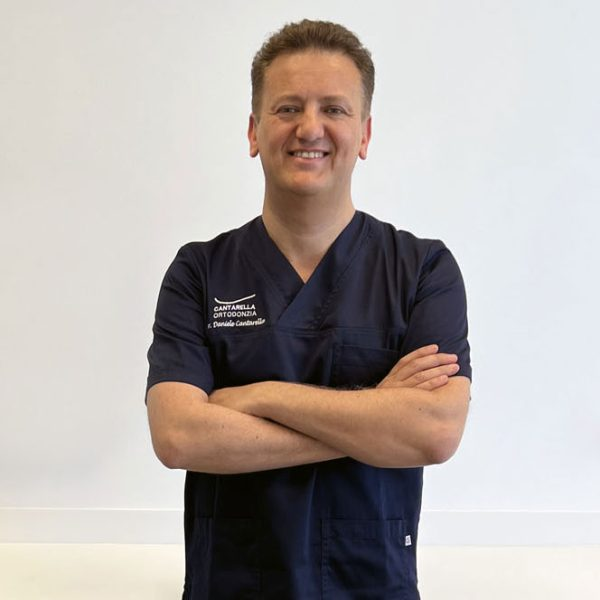
Daniele Cantarella
Speaker Biography
Dr. Daniele Cantarella is an international speaker in the field of Orthodontics. He received the Award of the European Federation of Orthodontics (FEO) for the best research publication in 2019. His areas of expertise are digital orthodontics, biomechanics, MARPE, and skeletal anchorage. He maintains a private practice in orthodontics in Treviso, Venice area, Italy.
Lecture Details
The work of Andrews in the 1970s ushered in an era in which orthodontists were relieved of much of the tedium of wire bending. During the 1980s and 1990s treatment mechanics were refined so that better outcomes became routinely achievable. Clinicians could then rely on well-positioned pre-adjusted brackets to achieve good tooth alignment, and this in turn provided a platform for advances in other areas of orthodontics, including the diagnosis and management of facial disharmony.
If we are aiming to provide world-class care through the 2020s and beyond there are questions which should be asked. What should be today’s dental, functional and facial profile goals for treatment? Can these be defined and measured, and what are the best treatment methods for achieving ideal results in a high percentage of cases?
This presentation will offer brief answers to these questions. It will suggest that classical orthodontic treatment with fixed appliances should be the preferred approach in most cases, supported with the latest diagnostic and treatment methods.
Learning outcomes
The presentation will show how the latest concepts of orthodontic diagnosis and treatment planning include an emphasis on soft tissues analysis. It will briefly review the principles of efficient intra-arch and inter-arch treatment mechanics and demonstrate how facial aesthetics can be enhanced by skeletal anchorage and MARPE in combination with fixed appliances in adolescents and young adults.
Presentation
Orthodontic treatment mechanics – what have we learned in the 50 years since Andrews?
Orthodontic treatment mechanics – what have we learned in the 50 years since Andrews?
Other Speakers
David Rice
Finland
David Rice is Head of the Department of Dentistry and Professor/Head of Orthodontics at the...
Aman Ulhaq
United Kingdom
Lecture Details
This presentation examines the emerging role...
Hong He
China
- Professor, chief physician, PhD supervisor.
- Director of the Orthodontic Teaching and Research Department,...
Kevin O’Brien
UK
Kevin O’Brien Emeritus Professor of Orthodontics at the University of Manchester UK.
Kevin was appointed...
Bart Vande Vannet
Belgium
Prof. Bart Vande Vannet is Professor of Dento-Facial Orthopaedics at the Université de Lorraine, Nancy,...
Liselotte Paulsson
Sweden
Associate Professor Liselotte Paulsson (Björnsson) is Chair and Director of the Postgraduate Program in Orthodontics...
Nearchos Panayi
Cyprus
Nearchos C. Panayi, is an orthodontist based in Limassol, Cyprus. He is an assistant Professor...
Raphael Patcas
Switzerland
Prof. Raphael Patcas is a Swiss board-certified orthodontist who has been jointly responsible for the...
Renato Cocconi
Italy
Dr. Renato Cocconi, DDS, MS obtained his postgraduate degree in orthodontics with full marks and...
Bjorn Ludwig
Germany
Björn Ludwig is an orthodontics specialist who operates his private office in a small village...